
Zerion Feed Case Study
Overview
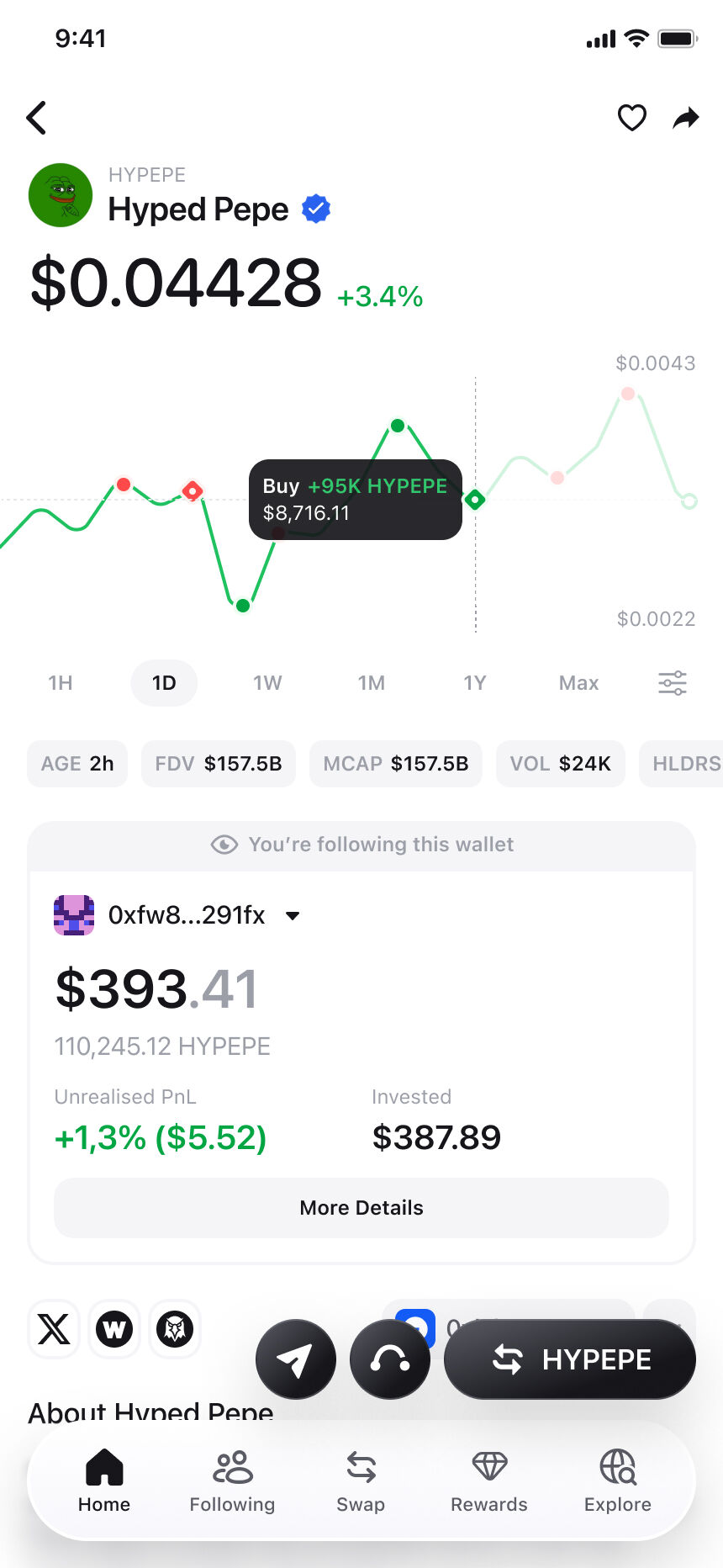
Zerion Feed is a real-time trading discovery interface integrated into Zerion Wallet. The project aimed to replace the manual, passive wallet-tracking flow with a fast, contextual, and actionable experience that helps users instantly react to market movements, follow relevant traders, and make informed trades directly within the app.
Problem Statement
Initially, users could manually track multiple wallets and transactions, but the process was slow and reactive. Notifications provided little context — they showed what happened but offered no quick way to understand or act. To check context, users had to open multiple screens and investigate token details manually — by that time, it was often too late to join an opportunity.
Two primary pain points defined the challenge:
- Decision paralysis: Users didn't know what to buy or whom to follow — discovery was fragmented and slow.
- Action inefficiency: Even when relevant events occurred, users had no clear path to act fast.
This turned into a broader design challenge around personalisation and context. Traders differ by strategy, portfolio size, and preferred narratives, so the system needed to adapt dynamically to different user types while staying lightweight and responsive.


Objectives
Increase the share of transacting users by turning notifications into trading actions
Provide contextual insights to support faster trading decisions
Deliver an engaging, personalised, and transparent discovery layer that fits the pace of Web3.
Research & Insights
At the time of ideation, there were no comparable Web3 apps to learn from. Traditional finance products were too static and structured for the highly volatile, meme-driven, and community-based Web3 environment. Therefore, the team relied on primary research and in-app behavioral data.
Methods included interviews with active traders, analytics of notification engagement. Key insights:
- Context gap: Users needed instant clarity — who traded, what, and why it mattered.
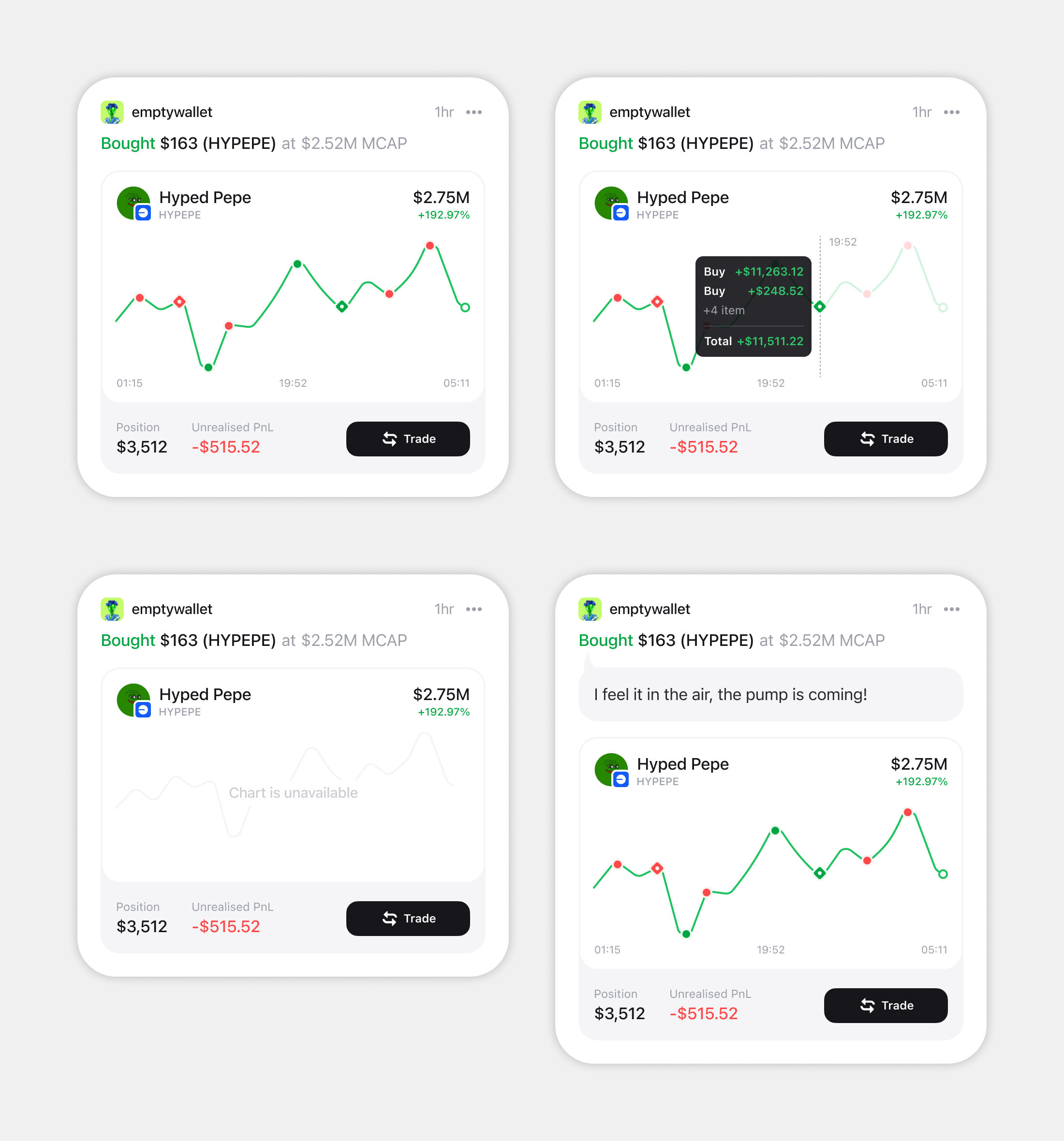
- Information limits: The card format required concise but rich content → trade info, token performance, and trader behavior.
- Interpretation logic: Traders wanted to understand position intent — was the trader entering, averaging, or exiting?
- Metric over price: Advanced users valued market cap over token price.
- Visual compression: Interactive micro-charts helped users quickly interpret token context and trader activity.
- Social layer: Adding comments enabled collective interpretation of market moves.
“Designing the Feed meant building something entirely new — just insights from real traders and data. Every iteration was guided by one goal: show just enough information to act fast, with clarity and purpose.”
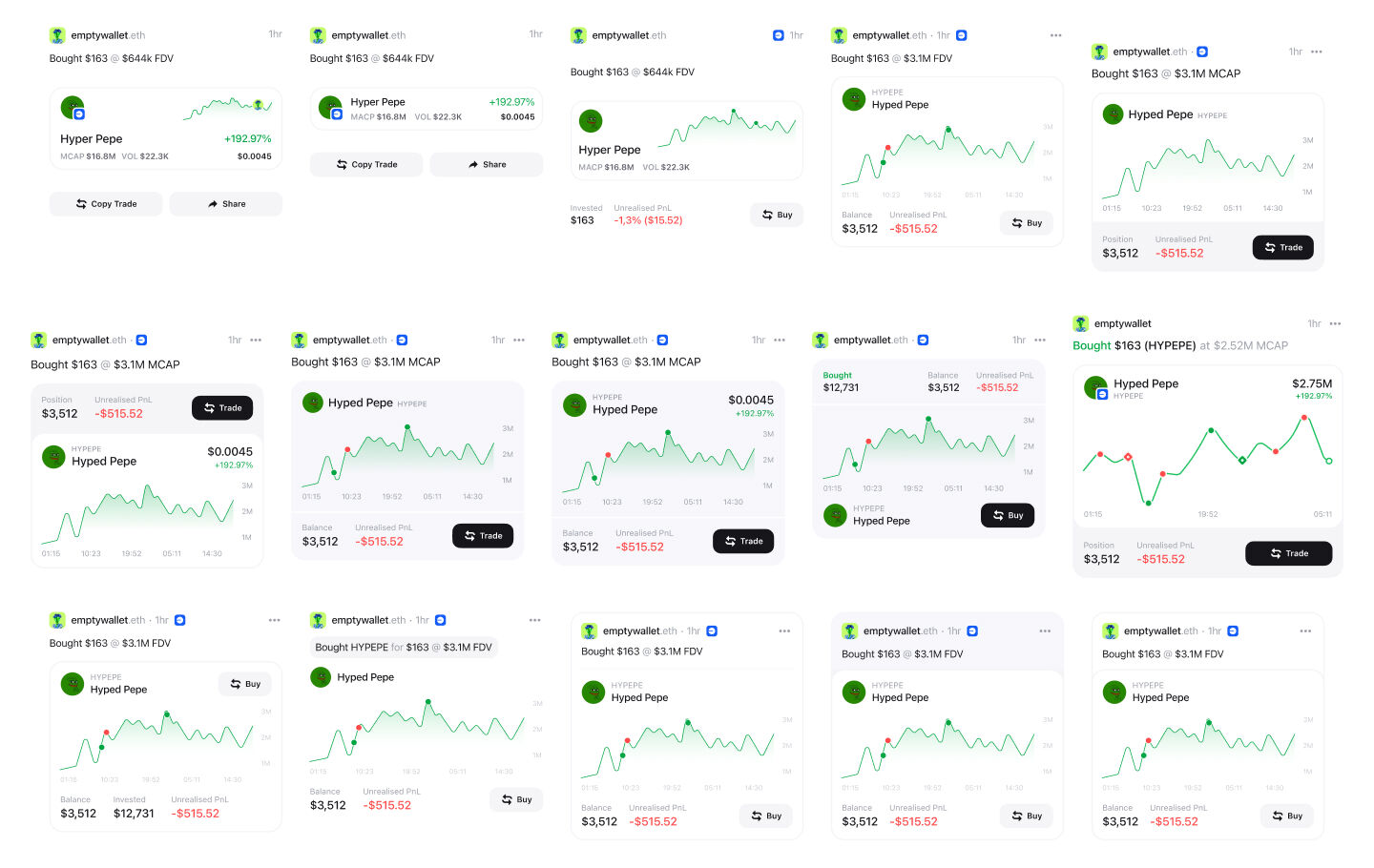
Transaction Card Discovery
Design Process
The design process involved close collaboration between designers and developers, operating in weekly iteration cycles. Each cycle included design reviews, prototype testing, and developer syncs to ensure consistent implementation across platforms. This iterative rhythm allowed rapid validation and data-driven design decisions.
Architecture
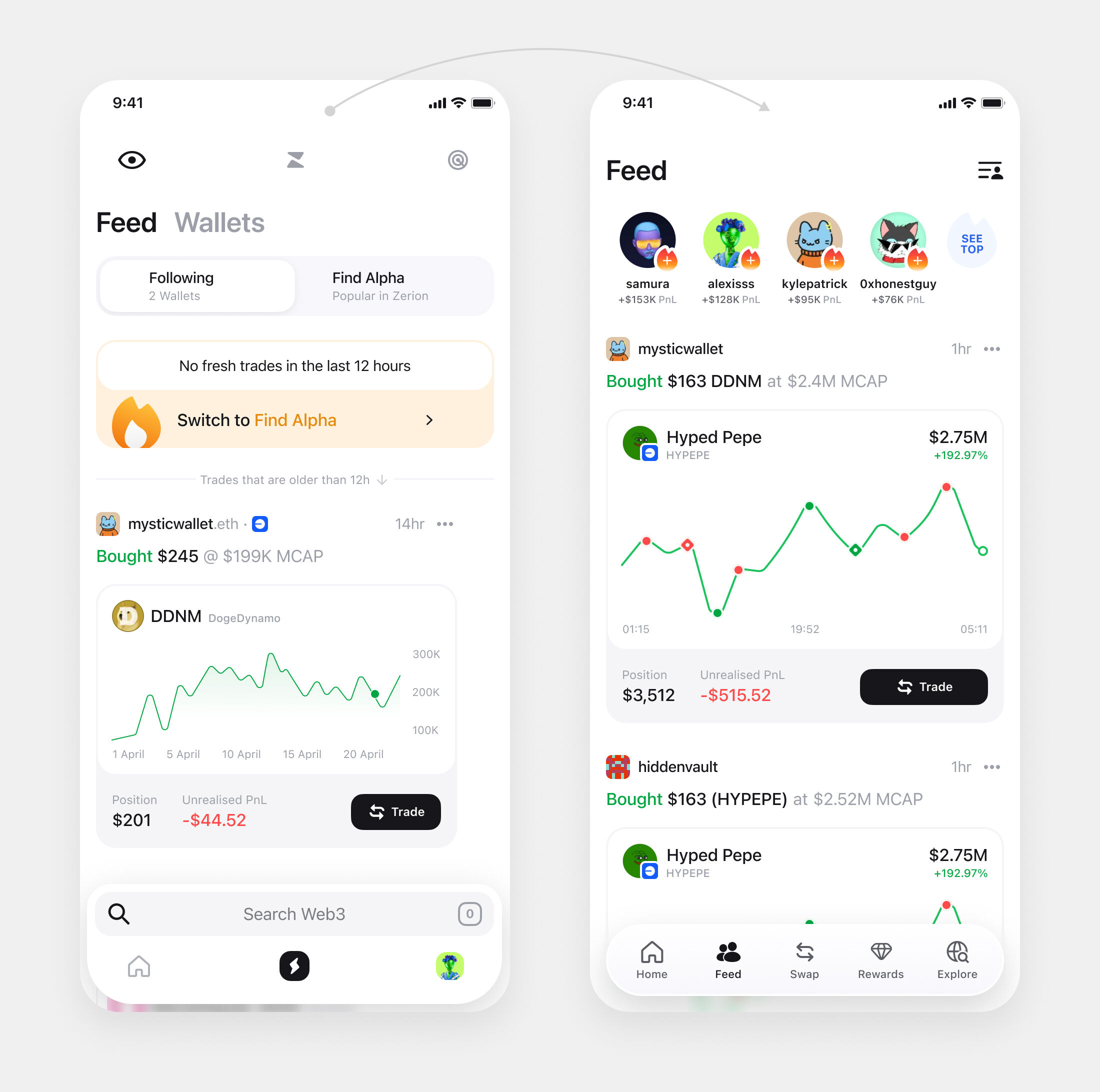
Originally, the Feed was split into two parts: one based on followed traders, another with algorithmic
recommendations.
Testing revealed a key onboarding gap — users who didn’t follow anyone faced an empty experience.
The solution was a
unified Alpha Feed, blending personalized and global data.
Followed users’ trades were prioritized, while
recommended
ones maintained an engaging first impression.
Components
The Feed relied on a single, versatile card component capable of rendering multiple trade types and states. Each card could flex between token insights, trader details and compact charts without breaking hierarchy or visual rhythm.
Trader Profiles & Discovery
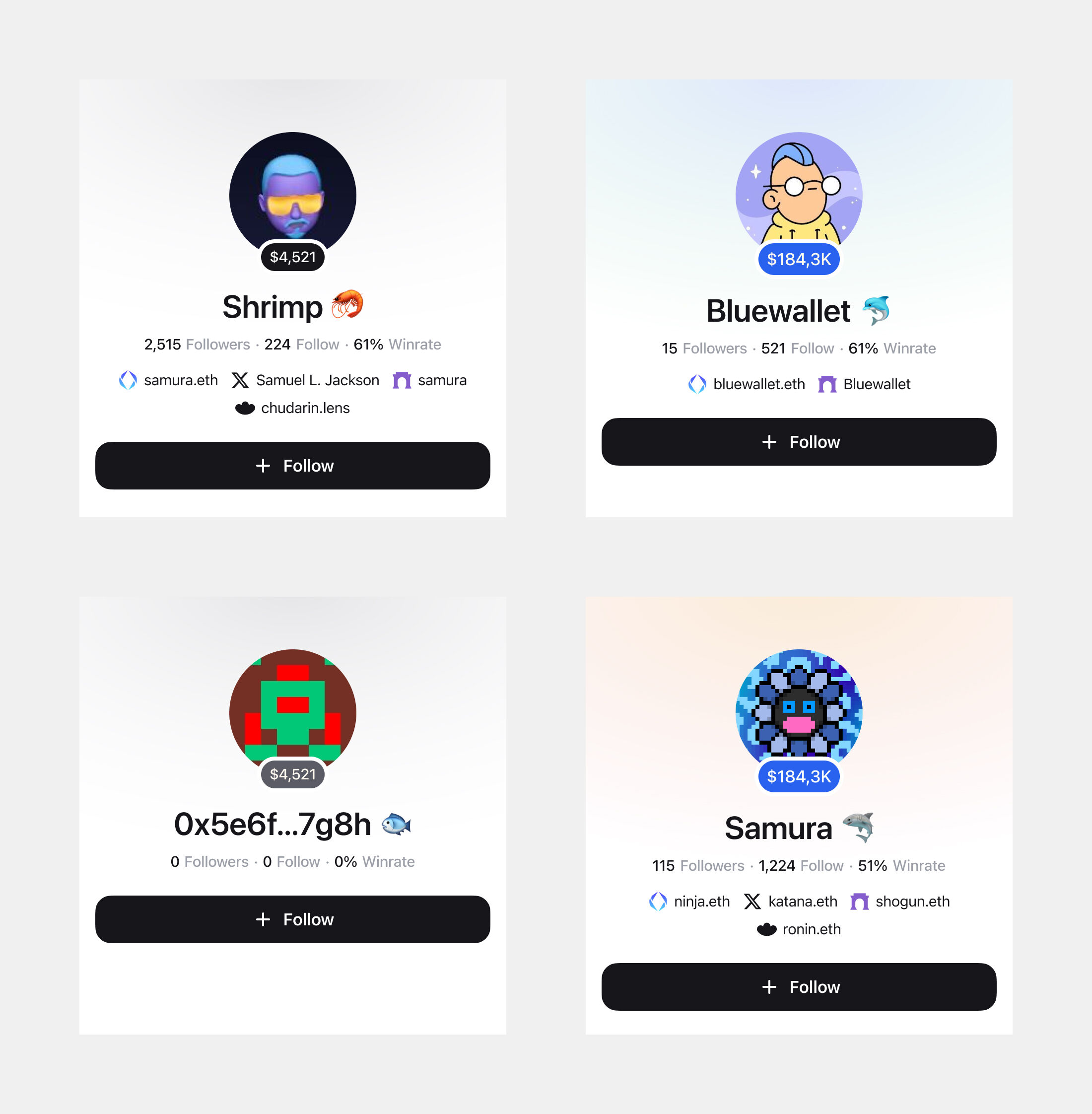
Frequent exposure to trader’s PnL and famous names reinforced discovery. Users could follow directly from Feed interaction, linking social discovery with trading behaviour.
Testing & Iteration
We ran usability tests and gradual feature rollouts, supported by A/B experiments comparing configurations of Feed density, sorting, and prioritisation. The focus was on balancing information load with clarity and performance.
“The hardest part was tuning the Feed — keeping it fast, detailed, and relevant without overwhelming users.”
Research Validation
The public Maze test in May 2025 validated the Feed concept through quantitative and qualitative insights.
User Behavior
- 54 participants (active Web3 traders) completed the study.
- 38% traded daily, 36% several times a day, and 22% weekly — reinforcing the need for instant, actionable UX.
- 78% were existing Watchlist users — ideal early adopters for Feed.
Findings
- 81% correctly interpreted metrics like PnL, Win Rate, and MCAP.
- 63% preferred cards showing token quantity, citing trust and clarity.
- 82% found mini-charts useful for evaluating trades.
- Decision readiness scored 6.5/7, while ease of use reached 6.1/7 and visual appeal 6.4/7.
- 41% said they would rely on Feed daily, 56% multiple times per day.
Impact
- Validated the unified Alpha Feed approach.
- Confirmed preference for actionable cards over static watchlists.
- Supported Zerion's transition toward personalised trading discovery.
Lessons Learned
- Onboarding must provide value instantly — even before personalisation fully kicks in.
- Personalisation should enhance discovery, not isolate users.
- User research is a must to create proven financial UX patterns.
- Card-based architectures can efficiently scale only if built with consistent data logic.
- Combining social and trading data unlocks new UX patterns for decentralized finance.
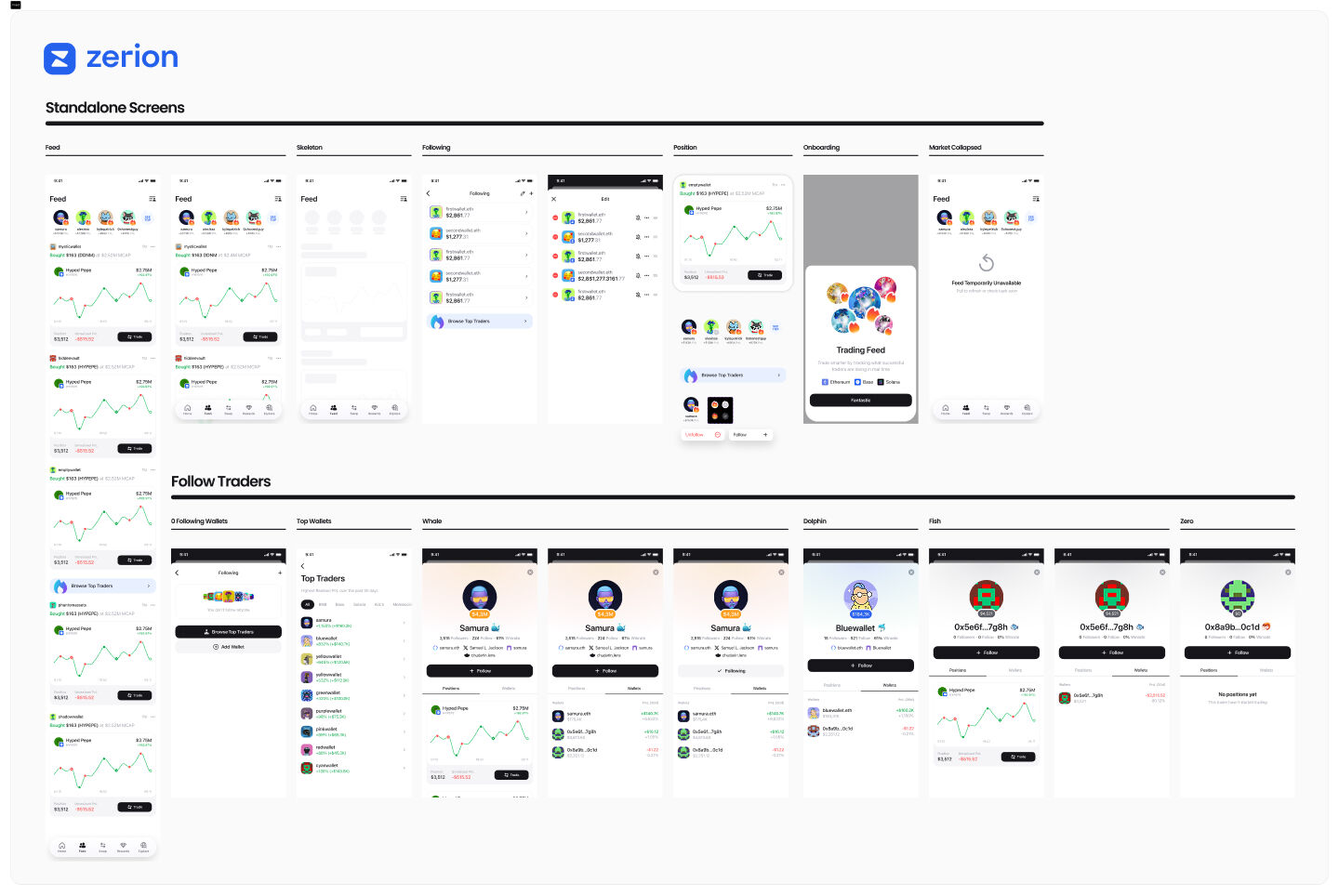
Figma Designs 🔗
“The Feed became more than just content — it’s a bridge between user curiosity, data transparency, and trading action.”